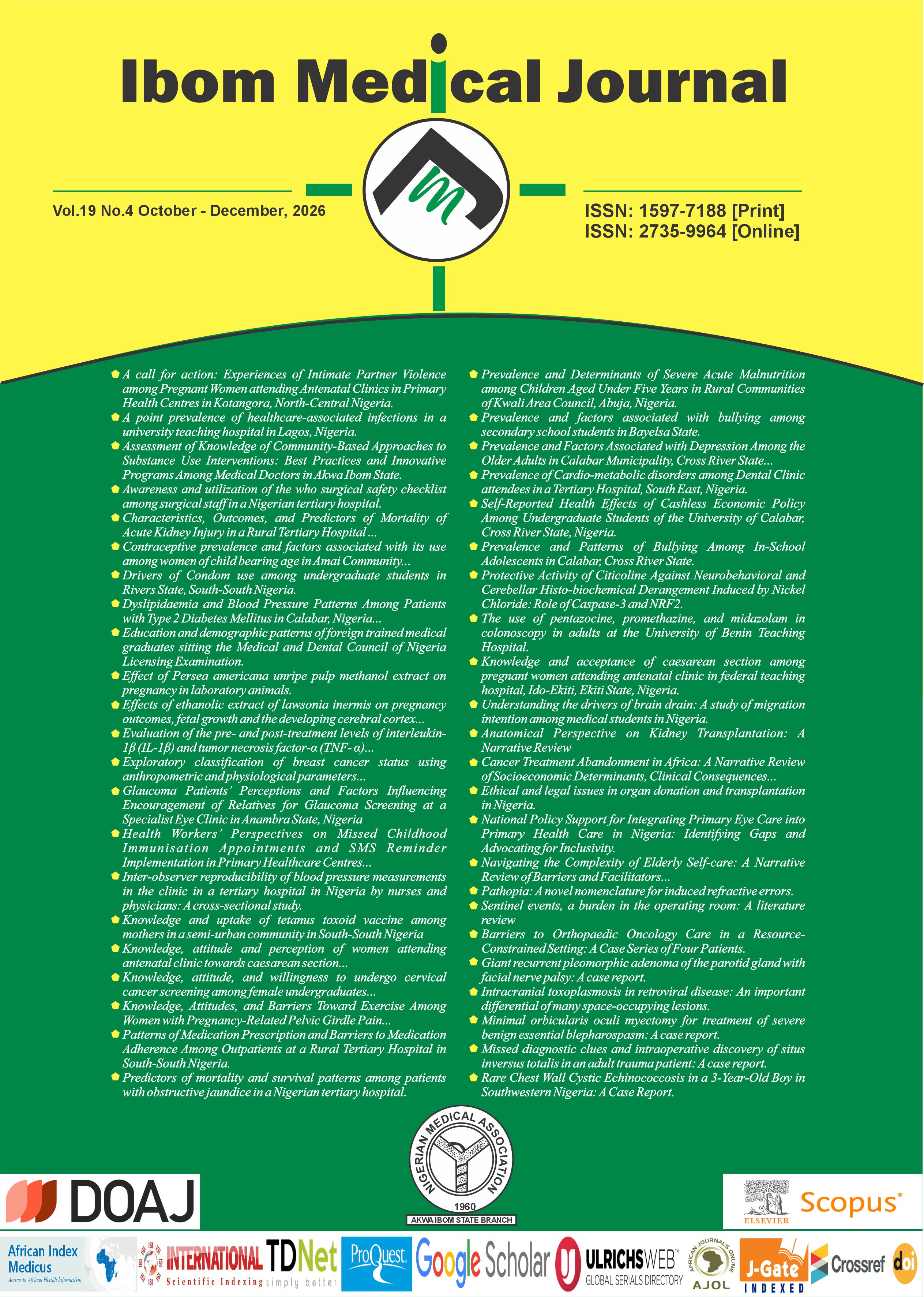
Knowledge and acceptance of caesarean section among pregnant women attending antenatal clinic in federal teaching hospital, Ido-Ekiti, Ekiti State, Nigeria
DOI:
https://doi.org/10.61386/imj.v19i4.1379Keywords:
Caesarean section, knowledge, acceptance, antenatal care, NigeriaAbstract
Context: Caesarean section (CS) is a vital obstetric intervention for preventing maternal and neonatal morbidity and mortality when medically indicated. However, acceptance of CS in Nigeria remains suboptimal despite increasing awareness. This study assessed the level of knowledge and acceptance of CS among pregnant women attending antenatal clinic (ANC) at the Federal Teaching Hospital, Ido-Ekiti (FETHI).
Materials and Methods: A descriptive cross-sectional study was conducted among 152 pregnant women selected through systematic random sampling. Data were collected using a structured, pre-tested questionnaire. Knowledge of CS was assessed using a scoring system and categorized as good or poor. Acceptance was measured as willingness to undergo CS if medically indicated. Data were analyzed using SPSS version 27. Associations were tested using Chi-square statistics, with p < 0.05 considered statistically significant.
Results: Awareness of CS was universal. Overall, 61.8% of respondents had good knowledge of CS, while 38.2% had poor knowledge. Acceptance of CS if medically indicated was reported by 74.3% of respondents. Acceptance was significantly higher among women with good knowledge of CS compared to those with poor knowledge (p < 0.001).
Conclusion: Knowledge and acceptance of CS among pregnant women attending ANC at FETHI were relatively high. Good knowledge was a significant predictor of acceptance. Strengthening antenatal education on CS may further improve timely acceptance and reduce preventable obstetric complications.
Downloads
Published
License
Copyright (c) 2026 Elegbede OE, Sanni TA, Alabi AK, Abioye OO, Asake OT, Idowu IO, Chukwu IS, Aiyenitaju MI, Awe OA, Faworaja OR5

This work is licensed under a Creative Commons Attribution 4.0 International License.