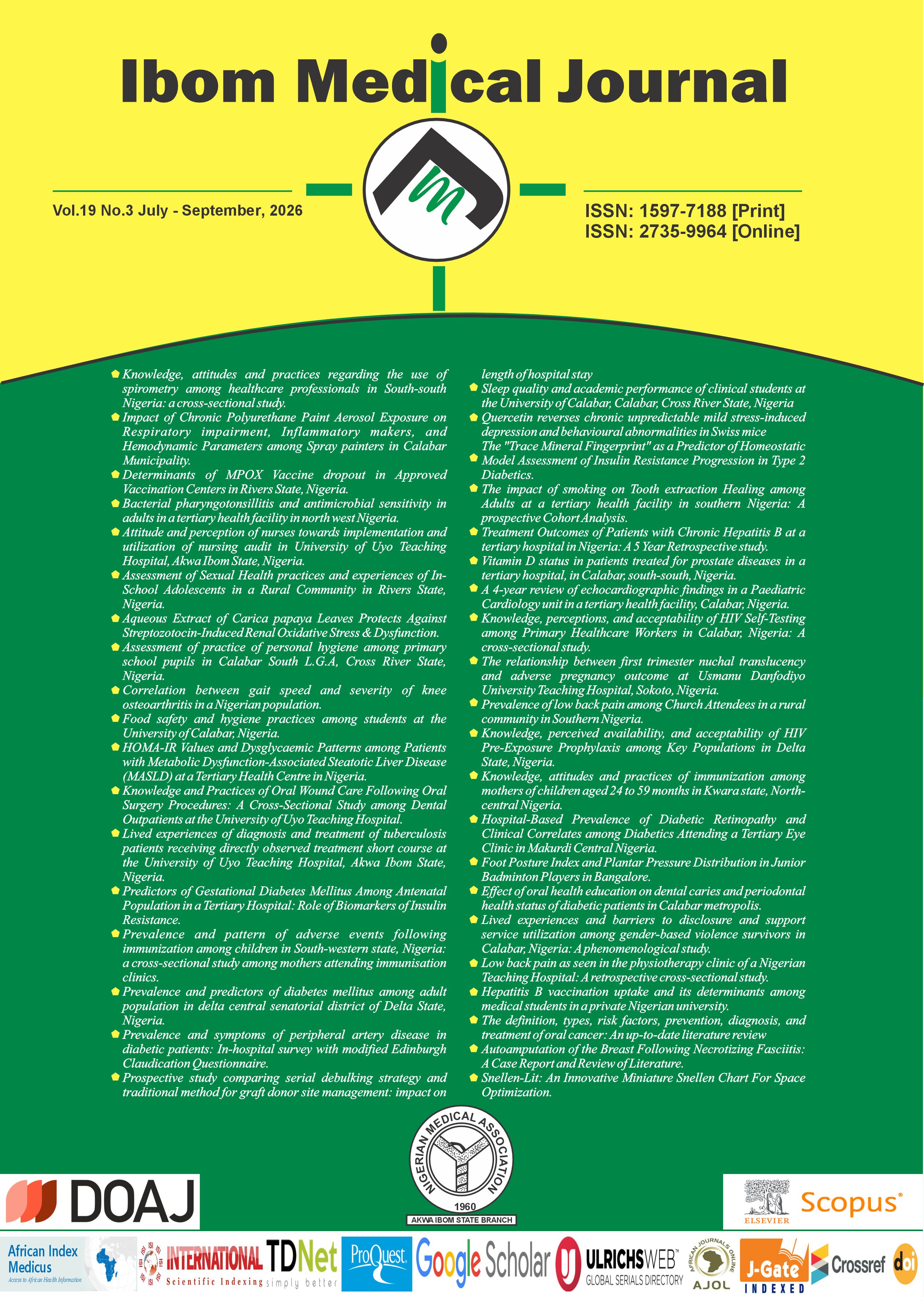
Knowledge, attitudes and practices of immunization among mothers of children aged 24 to 59 months in Kwara state, North-central Nigeria
DOI:
https://doi.org/10.61386/imj.v19i3.1204Keywords:
Immunization, Vaccination, Pathogens, Immunity, Knowledge, Practice, Perception, AttitudeAbstract
Context: Immunization and vaccination are controlled processes in which individuals are exposed to target pathogens to ensure that they develop immunity against the pathogens targeted. In infectious disease control, immunization and vaccination are core interventions which help reduce disease rates and death toll of many infectious diseases. This study evaluated the knowledge, attitudes, and practices of immunization among mothers in Kwara State, North-Central Nigeria.
Materials and Methods: Semi-structured questionnaires were administered to 400 eligible mothers selected using multistage sampling technique in 12 selected communities in Kwara State, Nigeria whose children were aged 24 to 59 months. Categorical data were summarised using frequency and percentages while quantitative normally distributed data were summarised as means and standard deviation. Chi-square was used to test for association between knowledge of mothers and uptake of routine immunization at level of significance of p-value <0.05.
Results: Over 70 percent of the study respondents had good knowledge of immunization schedule and its importance. A smaller fraction of respondents (25%), agreed strongly that uptake of immunization and vaccination is greatly influenced by parents' perception on the matter. About 20% of children aged 24 to 59 months in this study were not immunized/vaccinated.
Conclusion: A small fraction of parents of children in this study had doubts, and/or lacked understanding of immunization schedule and its importance. This led to less-than-optimal rates of children being immunized or vaccinated in the study region. Therefore, continuous health education programs on immunizations and vaccinations should be done. In rural areas, messages should also be given in local dialects. Respected members of the communities who can interact fluently in the local dialects should be engaged in the awareness program to improve parents’ understanding and acceptance.
Downloads
Published
License
Copyright (c) 2026 Yahaya MA, Udoh MA

This work is licensed under a Creative Commons Attribution 4.0 International License.