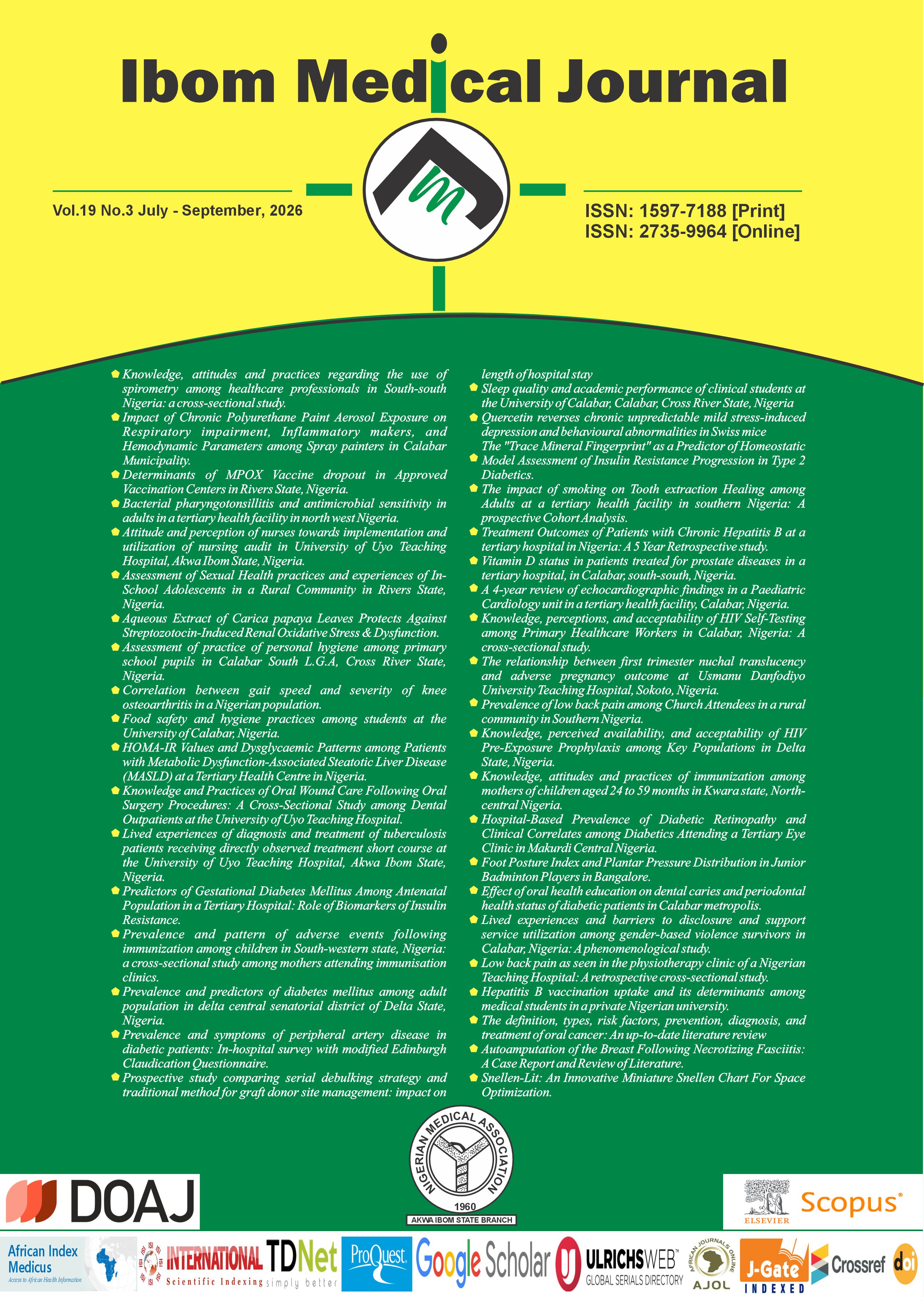
Knowledge and Practices of Oral Wound Care Following Oral Surgery Procedures: A Cross-Sectional Study among Dental Outpatients at the University of Uyo Teaching Hospital
DOI:
https://doi.org/10.61386/imj.v19i3.1180Keywords:
oral wound care, postoperative instructions, dental extractions, patient knowledge, wound healing, oral hygiene practicesAbstract
Context: Adequate knowledge and appropriate oral wound-care practices are essential for uneventful healing after dental procedures, yet patient-level of understanding and adherence to postoperative instructions remain poorly characterized.
Objective: To assess knowledge and self-reported oral wound-care practices among patients at a dental outpatient clinic and identify sociodemographic and clinical factors associated with adequate knowledge and practice.
Materials and Methods: An analytical cross-sectional study was conducted among 102 consecutive patients attending the dental outpatient department of a tertiary centre over a one-year period. Data were collected using a pretested, structured self-administered questionnaire comprising sociodemographic items, a 15-item knowledge scale, and a 12-item practice scale. Scores were categorized as adequate (≥60% correct). Multivariable logistic regression identified independent predictors.
Results: Approximately 52.9% were females; the mean age was 36.4 years (SD 12.3). Adequate knowledge was demonstrated by 56 (54.9%) of respondents, while inadequate knowledge was reported by only 46 (45.1%). The most frequent knowledge gap was identifying signs of wound infection (38.2%, correct). Higher educational attainment (aOR 3.12; 95% CI 1.87–5.20; P<0.001), prior dental experience (aOR 2.44; 95% CI 1.51–3.95; P<0.001), and receipt of written postoperative instructions (aOR 4.01; 95% CI 2.38–6.75; P<0.001) were significant independent predictors of adequate knowledge and practice.
Conclusion: Knowledge and practice of oral wound care are suboptimal, with deficits in infection recognition and dietary compliance. Written postoperative instructions are the most modifiable predictor, offering a readily implementable target for improving outcomes.
Downloads
Published
License
Copyright (c) 2026 Nwashindi A, Nwashindi MN

This work is licensed under a Creative Commons Attribution 4.0 International License.