
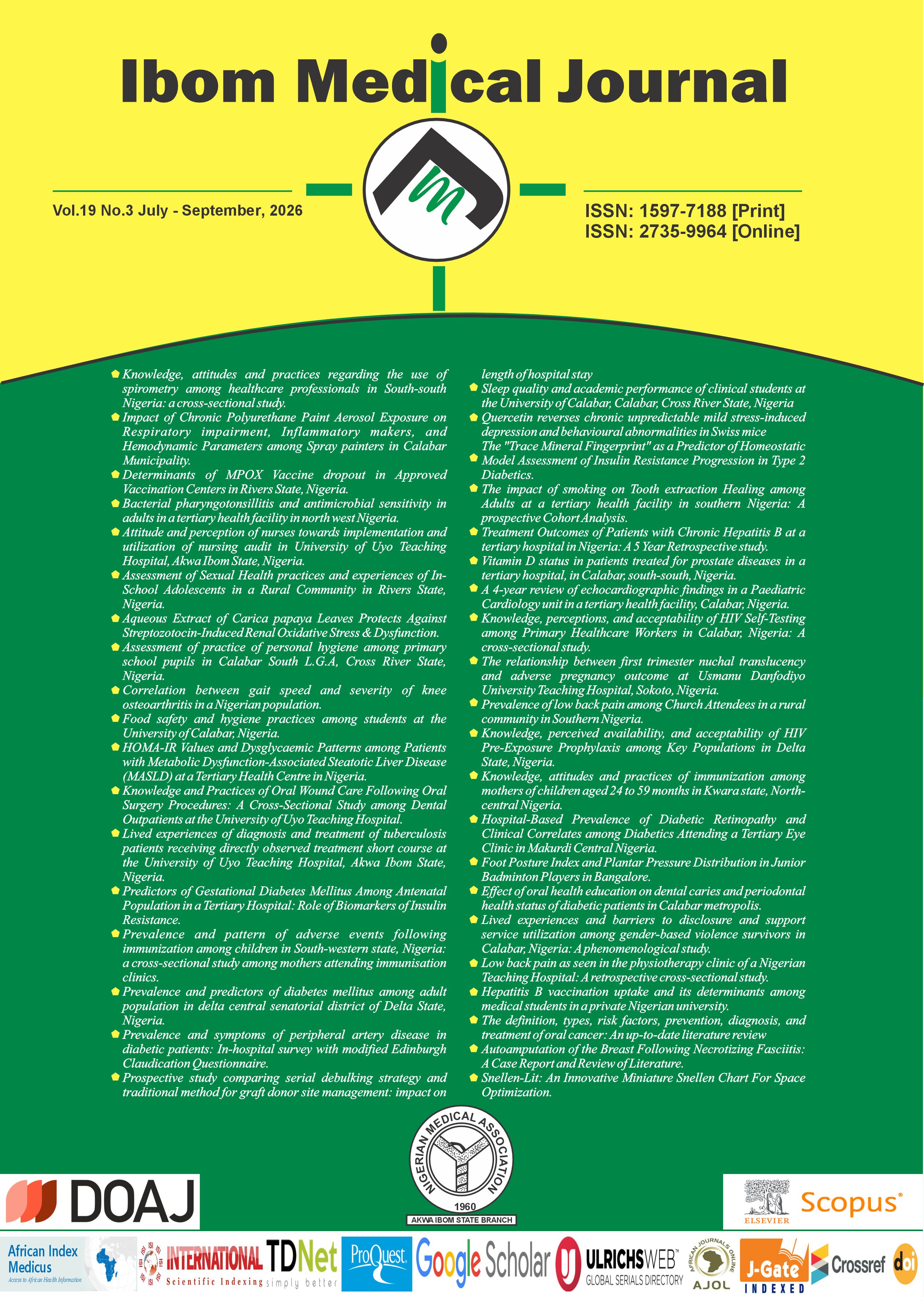
Impact of Chronic Polyurethane Paint Aerosol Exposure on Respiratory impairment, Inflammatory makers, and Hemodynamic Parameters among Spray painters in Calabar Municipality
DOI:
https://doi.org/10.61386/imj.v19i3.1170Keywords:
Spray painters, Polyurethane aerosols, Hemodynamic parameters, Inflammatory markers, Lung parametersAbstract
Context: Polyurethane paint is a reactive polymer made from polyol resin and isocyanates to produce a durable and resistant coating.
Objective: This study assessed the impact of chronic polyurethane paint aerosols on respiratory impairment, inflammatory markers, and hemodynamic parameters among spray painters in Calabar Municipality.
Materials and Method: A total of one hundred and forty six (n=146) eligible male participants, aged 20-40 yrs were recruited, and categorized into two groups of 73 participants per group; group I include Spray painters and group II comprised of Control subjects (n=73). Demographic data were obtained from all participants. Pulmonary function test was performed using a spirometer, lung parameters assessed include; Forced Vital Capacity [FVC], Forced Expiratory Volume in 1 second [FEV1], percentage of Forced Expiratory Volume in 1 [FEV1%], and Peak Expiratory Flow [PEF]). Hemodynamic indices was recorded using standard clinical instruments. Venous blood samples were analyzed for C-reactive protein and Interleukin-6 levels using ELISA kits.
Result: Group I showed significantly(P<0.001) reduced lung indices (FVC, FEV1 and PEF), suggesting presence of respiratory impairment. There was significant (P<0.001) increase in C-rP and IL-6 levels among the spray painters compared to control participants, indicating state of chronic systemic inflammation. Also, hemodynamic indices specifically systolic and diastolic pressures were significantly (P<0.001) higher in spray painters, indicating elevated cardiovascular stress.
Conclusion: Chronic occupational exposure to polyurethane paint aerosols is strongly linked to heightened inflammatory responses, diminished lung function, and elevated blood pressure. These findings highlight the need for improved occupational safety standard and periodic health screening for workers in the painting industry.
Downloads
Published
License
Copyright (c) 2026 Utionkpan LP, Ushuple CL, Agaba EA, Okwuonu IF, Usang SE

This work is licensed under a Creative Commons Attribution 4.0 International License.