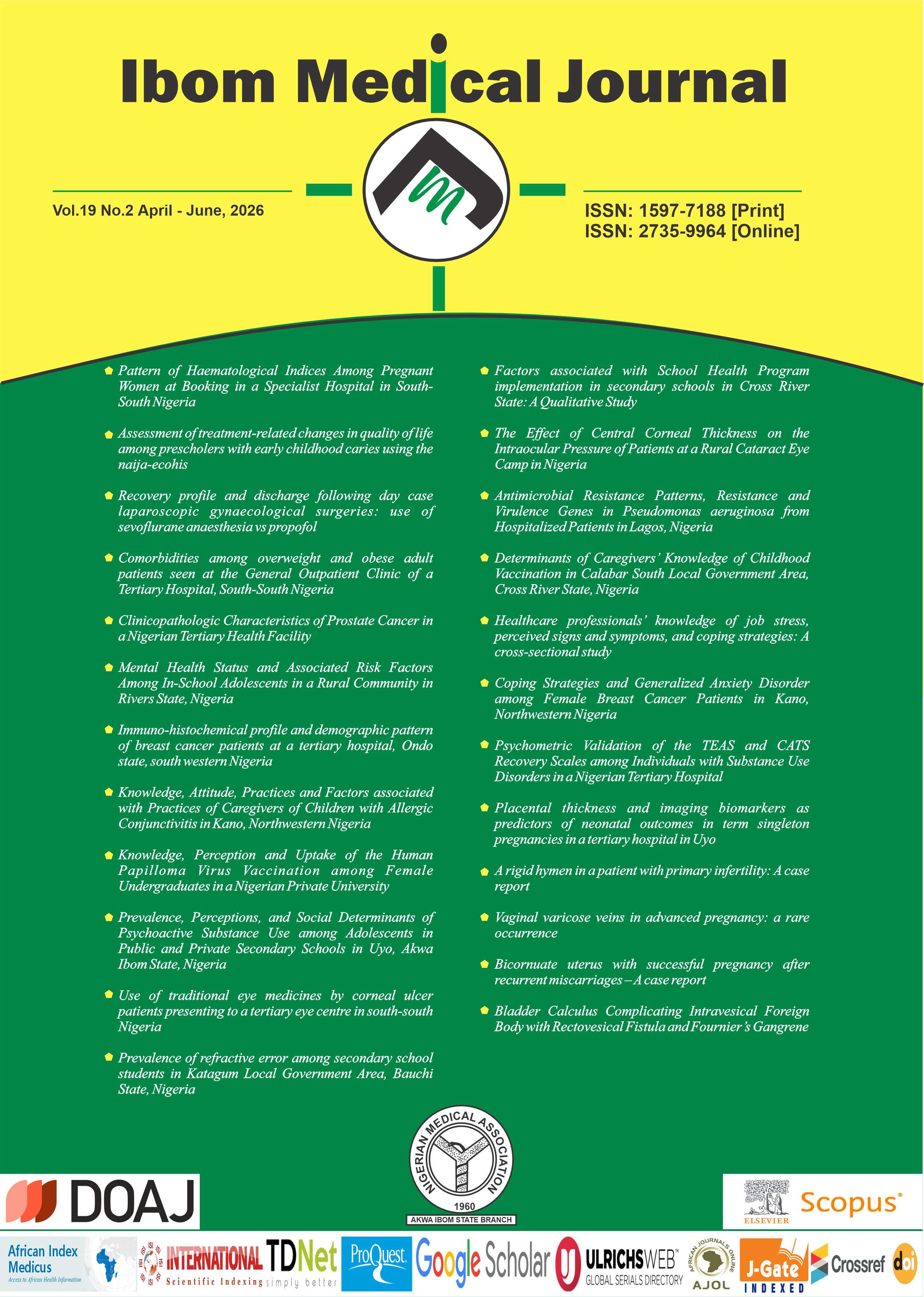
Factors associated with School Health Program implementation in secondary schools in Cross River State: A Qualitative Study
DOI:
https://doi.org/10.61386/imj.v19i2.1069Keywords:
National School Health Policy, School Health Program, School Head Teachers, Qualitative, NigeriaAbstract
Background: School health, a vital tool for the holistic well-being of the school population has dual roles of promoting health and adapting schools as settings for health-promoting activities. The dedication and awareness of school heads regarding school health policies were recognized as key drivers of successful implementation. So, this study, through the perspectives of the school heads, aimed to explore factors influencing SHP implementation in secondary schools in Cross River State based on the Socio-Ecological Model (SEM) as the thematic framework.
Methods: This qualitative study was carried out across 56 secondary schools in Cross River State in Southern Nigeria., where 6 Focus Group Discussions were conducted among head teachers of secondary schools in Cross River State. The data were analysed through a thematic framework method tailored for analyzing qualitative data
Results: Several factors were identified across SEM levels to affect the implementation of School Health Program (SHP) in the study area. These factors include individual awareness and knowledge, interpersonal collaboration, institutional resources, community involvement, and policy support.
Conclusion: This study revealed a sub-optimal school health program implementation in the state. Multi-level strategies are required at individual and structural level to strengthen SHP implementation. There should be awareness creation, capacity building of implementers, and improved stakeholders and government commitment to effective implementation of SHP in schools
Downloads
Published
License
Copyright (c) 2026 Ekpenyong NO, Isika AI, Efanga MO, Asuquo BJ

This work is licensed under a Creative Commons Attribution 4.0 International License.