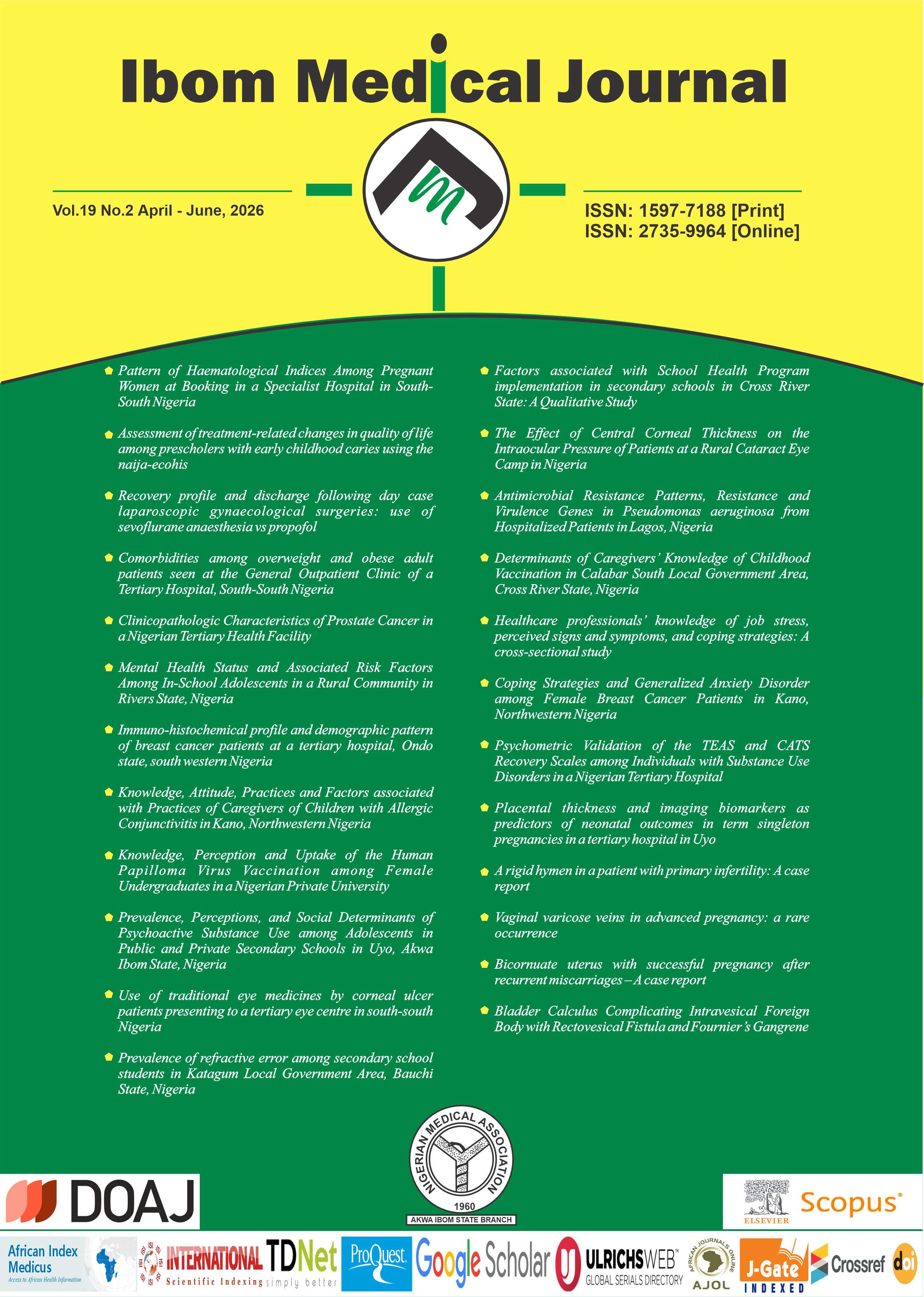
Use of traditional eye medicines by corneal ulcer patients presenting to a tertiary eye centre in south-south Nigeria
DOI:
https://doi.org/10.61386/imj.v19i2.1067Keywords:
Traditional medicine, Traditional eye medicine, corneal ulcer, blindness, NigeriaAbstract
Background: Unorthodox therapies, organic or inorganic agents, applied through different routes of administration to achieve a desired ocular therapeutic effect and referred to as Traditional eye medicines (TEM), are associated with devastating sequelae on the cornea, leading to avoidable blindness. The use of TEM is usually deleterious to the eye and its use on a diseased cornea is more devastating.
Objective: To investigate the frequency and forms of TEM used by patients with corneal ulcer presenting to the Eye department, University of Calabar Teaching Hospital (UCTH), Calabar, Cross River State, Nigeria.
Materials and Methods: It was a retrospective hospital-based descriptive study undertaken at the Eye department, UCTH, Calabar, Cross River State, Nigeria.The use of TEM by corneal ulcer patients presenting to the department during a one-year period (January to December 2024) was documented. Data was analysed using SPSS version 20 (SPSS Inc. Illinois, Chicago).
Results: A total of 33 patients with corneal ulcer were seen within the study period. Over half of the patients 18 (54.5%) were in the 21-50 years age range. The male to female ratio of patients was 2.3:1. Farming (39.4%), trading (21.2%) and student/pupil (18.2%) were the three most common occupations of participants. Almost half of the patients 16 (48.5%) had applied TEM prior to presentation, of which, about half 7(43.8%) of these TEM users had instilled two different substances (either concomitantly or sequentially). Biological-based substances accounted for 22 (95.7%) of TEMs used by the patients.
Conclusion: There was a worrisome rate of TEM use in the treatment of corneal ulcer prior to orthodox ophthalmic consultation. Strategic, long term eye health educational intervention at the grassroot is necessary to curtail the prevalent use of TEM among patients with corneal ulcer.
Downloads
Published
License
Copyright (c) 2026 Ezeh EI, Ezeh RN, Ngaji MP, Eduvie VA, Agbor IE, Aigbomian EJ, Ekpe VU, Chinawa NE, Uzomba AE, Ibanga AA

This work is licensed under a Creative Commons Attribution 4.0 International License.